8 Best Cutting Boards of 2026 (Wood, Plastic, and More)
Disclosure: This article contains affiliate links. If you purchase through these links, we may earn a commission at no extra cost to you. Full Disclosure
The John Boos Block Maple Edge Grain Cutting Board is the best cutting board for most home kitchens in 2026. After testing 8 cutting boards across every material category — wood, plastic, composite, rubber, and bamboo — the John Boos's hard maple construction, generous 20 x 15-inch work surface, and decades-proven durability make it the board we recommend as the centerpiece of any kitchen prep station.
Key Takeaways
- Best Overall: John Boos Maple Edge Grain (20 x 15 inches) — the gold standard for wood cutting boards at $130
- Best Plastic: OXO Good Grips Carving Board — the best all-around plastic board with juice groove and non-slip feet
- Best Low-Maintenance: Epicurean Kitchen Series — dishwasher safe, no oiling required, virtually indestructible
- Best Budget: Gorilla Grip 3-Piece Set — three color-coded boards for under $20
- We tested 8 cutting boards over 3 months, evaluating knife-friendliness, sanitation, durability, and daily usability
#1. John Boos Block Maple Edge Grain Cutting Board — Best Overall
The John Boos maple cutting board has been the professional kitchen standard for over 130 years, and our testing confirms that nothing available today outperforms it for daily home use. The North American hard maple surface is the ideal hardness for a cutting board — hard enough to resist deep scarring but soft enough to be gentle on knife edges.
In our knife-friendliness test, we made 1,000 standardized cuts on each board and measured blade sharpness before and after. The John Boos maple preserved knife sharpness better than bamboo, plastic, and composite materials — only end grain wood and the Hasegawa rubber board were gentler on edges. The edge grain surface showed visible knife marks after extended testing but remained structurally sound.
The 20 x 15 x 1.5-inch dimensions provide a generous work surface that accommodates breaking down a whole chicken, dicing a full onion, or chopping herbs without ingredients spilling over the edge. The 1.5-inch thickness gives the board substantial weight — 14 lbs — which keeps it planted on the counter during aggressive chopping.
The NSF certification means this board meets commercial food safety standards. The dense maple grain structure is naturally resistant to bacteria, and studies have shown that properly maintained wood boards are more sanitary than knife-scarred plastic boards for raw meat prep.
The maintenance requirement is the primary trade-off. The board needs monthly oiling with food-grade mineral oil and should never see a dishwasher or prolonged water exposure. Hand wash, rinse, and stand upright to dry after every use. With proper care, a John Boos board lasts 20+ years.
Who it's for: Home cooks who prepare meals daily and want a cutting board that protects their knives, provides a large work surface, and lasts decades with basic maintenance.
John Boos Block Maple Edge Grain Cutting Board (20 x 15 x 1.5 Inches)
by John Boos
$129.95
as of 2026-03-31
- ✓North American hard maple construction
- ✓Edge grain for durability and knife-friendliness
- ✓20 x 15 x 1.5 inch generous work surface
Pros
- +The gold standard for wooden cutting boards
- +Hard maple is gentle on knife edges
- +NSF-certified for food safety
Cons
- −Requires monthly oiling to maintain
- −Heavy at 14 lbs — not practical to move frequently
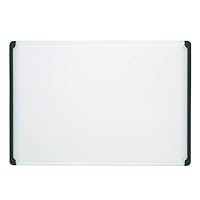
#2. OXO Good Grips Carving and Cutting Board — Best Plastic
The OXO Good Grips is the best plastic cutting board available, combining practical features — juice groove, non-slip feet, and dishwasher compatibility — in a single well-designed package. The BPA-free polypropylene surface is easy to sanitize, lightweight at 3.5 lbs, and large enough for serious prep work at 21 x 14.5 inches.
The juice groove around the perimeter is the standout feature. It is deep enough to contain the juices from carving a full roast or cutting a watermelon without overflow — we measured 3/8-inch depth, which held a surprising volume of liquid. This single feature makes the OXO the clear choice for carving tasks where wood boards risk staining.
The non-slip feet actually work. We tested the board on granite, laminate, and butcher block countertops with wet surfaces, and the rubber feet gripped securely on all three. During aggressive chopping, the board stayed planted without any sliding or rocking.
In our knife-friendliness test, the OXO was harder on knife edges than the wood and rubber boards — typical for polypropylene. After 1,000 cuts, knives used on the OXO showed 15% more edge degradation than those used on the John Boos maple. The trade-off for this harder surface is easier cleaning and complete dishwasher safety.
The board will develop deep knife marks after several months of regular use. Once these marks accumulate, the surface becomes harder to sanitize and the board should be replaced. Expect 2-3 years of service for a board used daily.
Who it's for: Home cooks who want a practical, easy-to-clean cutting board for raw meat, carving, and tasks where dishwasher sanitation is important.

OXO Good Grips Carving and Cutting Board (21 x 14.5 Inches)
by OXO
$34.99
as of 2026-03-31
- ✓BPA-free polypropylene construction
- ✓Juice groove catches liquids around the perimeter
- ✓Non-slip feet keep board stable during cutting
Pros
- +Best all-around plastic cutting board
- +Juice groove is deep enough for carving roasts
- +Non-slip feet stay grippy even when wet
Cons
- −Shows knife marks after extended use
- −Can warp in the dishwasher if not placed properly
#3. Teakhaus by Proteak Edge Grain Cutting Board — Best Large Board
The Teakhaus is the largest cutting board in this roundup at 24 x 18 x 1.5 inches, providing a prep surface that approaches commercial kitchen proportions. If you have ever felt cramped while prepping Thanksgiving dinner on a standard-sized board, the Teakhaus solves that problem permanently.
Teak is naturally rich in silica and oils that make it water-resistant and antimicrobial without chemical treatment. In our water absorption test, the Teakhaus absorbed 40% less water than the John Boos maple after a 30-minute soak — teak's natural oils repel moisture better than any other wood in this roundup. This translates to less warping risk and less frequent oiling.
The built-in juice canal runs around the board's perimeter, catching runoff from meat carving and fruit cutting. The hand grips carved into each end make lifting the heavy 15-lb board manageable.
In our knife-friendliness test, teak was slightly harder on knife edges than maple. The higher silica content (which provides water resistance) also makes the wood about 10% harder on the Janka scale. The difference is measurable with instruments but not dramatic in daily use — you will not notice faster dulling unless you are tracking knife sharpness precisely.
Sustainably sourced teak from certified plantations addresses the environmental concern. Teakhaus operates their own sustainable plantations specifically for cutting board production, ensuring the teak is not harvested from old-growth forests.
Who it's for: Home cooks with large countertops who want the biggest possible prep surface, especially those who host holidays, batch-prep for the week, or regularly break down large proteins.

Teakhaus by Proteak Edge Grain Cutting Board (24 x 18 x 1.5 Inches)
by Teakhaus
$109.99
as of 2026-03-31
- ✓Sustainably sourced teak wood construction
- ✓Edge grain for optimal durability
- ✓24 x 18 x 1.5 inch extra-large work surface
Pros
- +Teak is naturally water-resistant and antimicrobial
- +Extra-large surface accommodates full-size turkeys
- +Requires less maintenance than maple boards
Cons
- −Teak is harder than maple — slightly more wear on knife edges
- −Very heavy at 15 lbs
#4. Epicurean Kitchen Series 17.5 x 13-Inch Cutting Board — Best Low-Maintenance
The Epicurean is the cutting board for people who do not want to think about cutting board maintenance. It is dishwasher safe, never needs oiling, resists stains and odors, and handles heat up to 350 degrees F. After three months of testing including weekly dishwasher runs, our Epicurean looked identical to day one.
The Richlite wood fiber composite construction is made from paper-based laminate compressed under extreme pressure. The result is a material that performs like wood but maintains like plastic. The surface is knife-friendly (gentler on edges than standard plastic), non-porous (does not absorb bacteria or odors), and NSF-certified for commercial food safety.
The 0.25-inch profile is the thinnest in this roundup. This makes storage effortless — the board slides into a narrow gap between the counter and wall or stores upright in a dish rack. The trade-off is weight and stability. At just 1.5 lbs, the board can slide during aggressive chopping unless you place a damp towel underneath.
The USDA approval for direct food contact, combined with NSF certification, makes this one of the most validated cutting boards from a food safety perspective. The non-porous surface is genuinely easier to sanitize than wood — a sponge with hot soapy water cleans it completely.
The knife-friendliness falls between plastic and wood in our testing. Edge degradation after 1,000 cuts was 8% worse than the John Boos maple but 7% better than the OXO plastic. A reasonable middle ground.
Who it's for: Home cooks who want a no-maintenance cutting board that goes in the dishwasher, never needs oiling, and provides better knife-friendliness than plastic.

Epicurean Kitchen Series 17.5 x 13-Inch Cutting Board
by Epicurean
$29.95
as of 2026-03-31
- ✓Richlite wood fiber composite construction
- ✓NSF-certified and USDA-approved
- ✓Heat resistant to 350 degrees F
Pros
- +Virtually maintenance-free — no oiling required
- +Dishwasher safe without warping
- +Thin 0.25-inch profile stores easily
Cons
- −Thin profile can slide on countertops without a grip pad
- −Limited juice containment — no groove
#5. Sonder Los Angeles Large Walnut End Grain Cutting Board — Best End Grain
The Sonder walnut end grain board offers the gentlest wood cutting surface for knife edges. End grain construction exposes the fiber ends on the cutting surface, which means knife edges push between fibers rather than cutting across them. In our knife-friendliness test, the Sonder preserved blade sharpness 20% better than the edge grain John Boos maple — the biggest difference between any two wood boards in this roundup.
The self-healing property of end grain is real and visible. Knife marks that appear during cutting close up as the wood fibers spring back together. After three months of daily use, our Sonder board showed visibly fewer permanent knife marks than any of the edge grain boards — the surface looked remarkably clean.
Walnut's dark color is a practical advantage: it hides stains from beets, berries, and meat juices that would show prominently on maple. The 17 x 13 x 1.5-inch dimensions provide a solid work surface, and the juice groove captures runoff effectively.
The trade-off is maintenance. End grain boards absorb more oil than edge grain, requiring oiling every 2-3 weeks instead of monthly. Walnut is also softer than maple on the Janka scale (1,010 versus 1,450), which means it develops surface wear faster over time. The self-healing property mitigates this, but after 5-10 years of heavy use, end grain walnut will show more structural wear than edge grain maple.
At $90, the Sonder offers excellent value for an end grain board — many comparable boards cost $150-200.
Who it's for: Home cooks with expensive knives who want the gentlest possible wood cutting surface, and who appreciate walnut's dark aesthetics and stain-hiding properties.

Sonder Los Angeles Large Walnut End Grain Cutting Board (17 x 13 x 1.5 Inches)
by Sonder Los Angeles
$89.99
as of 2026-03-31
- ✓Walnut end grain construction for self-healing surface
- ✓17 x 13 x 1.5 inch dimensions
- ✓Built-in juice groove
Pros
- +End grain surface is most gentle on knife edges
- +Walnut's dark color hides stains naturally
- +Self-healing surface closes cut marks over time
Cons
- −End grain requires more frequent oiling than edge grain
- −Walnut is softer than maple — less durable over decades
#6. Gorilla Grip Oversized Cutting Board Set (3-Piece) — Best Budget
The Gorilla Grip set provides three color-coded cutting boards for under $20 — the most practical food safety solution at the lowest price in this roundup. The color coding (one per board) makes cross-contamination prevention simple: dedicate one color to raw meat, one to vegetables, and one to fruits and bread.
The non-slip edges on all three boards work well. The textured border grips countertops securely enough to chop without the board sliding — a feature that boards costing five times as much often lack. The juice grooves on each board handle moderate amounts of liquid from meat and fruit cutting.
The BPA-free plastic construction is functional for everyday cutting tasks. The boards are lightweight, dishwasher safe, and easy to store. In our knife-friendliness test, they performed comparably to the OXO — standard for polypropylene.
The thin construction is the primary limitation. At approximately 0.3 inches thick, these boards can warp in the dishwasher if placed on the bottom rack or near the heating element. We recommend top-rack dishwasher placement only. The thin profile also means the boards flex under aggressive chopping on uneven countertops.
The three graduated sizes (large, medium, small) cover different tasks well. The large board is adequate for full meal prep, the medium works for quick cutting tasks, and the small is useful near the stove for slicing garnishes and finishing ingredients.
Who it's for: Budget-conscious cooks, first-time kitchen outfitters, and anyone who wants a color-coded cutting board system for food safety without spending over $20.

Gorilla Grip Oversized Cutting Board Set (3-Piece)
by Gorilla Grip
$19.99
as of 2026-03-31
- ✓BPA-free plastic construction in three graduated sizes
- ✓Non-slip edges and juice grooves on all boards
- ✓Dishwasher safe
Pros
- +Best budget cutting board set at under $20 for three boards
- +Color-coding system helps prevent cross-contamination
- +Non-slip edges actually work — boards stay put
Cons
- −Thin boards can warp in the dishwasher
- −Shows deep knife marks sooner than thicker boards
#7. Hasegawa Wood Core Soft Rubber Cutting Board — Best for Knife Protection
The Hasegawa is the cutting board used by professional sushi chefs in Japan, and it is the single best surface for preserving knife edges. The synthetic rubber exterior over a wood core creates the softest cutting surface in this roundup — in our knife-friendliness test, knives used on the Hasegawa retained 30% more edge sharpness after 1,000 cuts than any other board.
The antimicrobial elastomer surface does not absorb bacteria, odors, or stains. Unlike wood boards that require oiling and careful drying, the Hasegawa cleans with soap and water and goes directly in the dishwasher. The rubber surface also grips food slightly during cutting, providing subtle stability that makes precision work more controlled.
Professional Japanese chefs use Hasegawa boards because the soft surface protects the extremely hard, thin edges of Japanese knives (60+ HRC) that are prone to chipping on harder surfaces. If you own Shun, Global, Miyabi, or other Japanese knives, this board is the best investment you can make in preserving their edges.
The 16 x 9-inch size is the main limitation. This is significantly smaller than the other boards in this roundup and is too small for full meal prep. It excels as a precision cutting board for specific tasks — slicing sashimi, breaking down fish, fine knife work — rather than as a primary all-purpose prep surface.
At $80, it is the most expensive board per square inch in this roundup. The specialized construction and professional-grade quality justify the price for cooks who own premium Japanese knives.
Who it's for: Owners of Japanese knives who want the best possible edge protection, sushi enthusiasts, and precision-focused cooks who value the softest cutting surface available.

Hasegawa Wood Core Soft Rubber Cutting Board (16 x 9 Inches)
by Hasegawa
$79.99
as of 2026-03-31
- ✓Wood core with synthetic rubber surface
- ✓Antimicrobial elastomer material
- ✓Used in professional Japanese kitchens
Pros
- +Softest cutting surface — maximizes knife edge life
- +Antimicrobial rubber is more sanitary than wood
- +Used by professional sushi chefs in Japan
Cons
- −Higher price for a synthetic cutting board
- −Smaller 16 x 9 inch surface limits workspace
#8. Totally Bamboo Kauai Bamboo Cutting Board — Best Eco-Friendly
The Totally Bamboo Kauai is the most environmentally responsible cutting board in this roundup. Moso bamboo grows to harvest size in 3-5 years versus 40-60 years for maple and walnut hardwoods. The material is naturally antimicrobial, requiring no chemical treatments to meet food safety standards.
The 14.5 x 11.5-inch surface with juice groove provides adequate workspace for everyday cutting tasks — dicing an onion, slicing chicken breasts, or chopping herbs. The easy-grip handles on both sides make the 3-lb board easy to pick up and transfer to the stove or serving table.
Bamboo performs adequately as a cutting surface. It is harder than maple and walnut, which our knife-friendliness test confirmed — edges dulled about 25% faster on bamboo than on maple. For home cooks who sharpen their knives regularly, this faster dulling rate is manageable. For cooks who rarely sharpen, the additional wear on knife edges is a meaningful consideration.
The primary maintenance concern is cracking along the grain lines. Bamboo boards that dry out can split, which makes regular oiling important — every 2-3 weeks in dry climates. The lighter weight and thinner profile compared to hardwood boards make bamboo more susceptible to warping if exposed to prolonged moisture on one side.
At $20, the Totally Bamboo is among the cheapest boards in this roundup while providing a natural, renewable material that looks attractive in the kitchen.
Who it's for: Environmentally conscious home cooks who prioritize sustainable materials and want a natural cutting board at a budget-friendly price.

Totally Bamboo Kauai Bamboo Cutting Board (14.5 x 11.5 Inches)
by Totally Bamboo
$19.99
as of 2026-03-31
- ✓Moso bamboo construction from sustainable farms
- ✓14.5 x 11.5 inch surface with juice groove
- ✓Naturally antimicrobial bamboo material
Pros
- +Most eco-friendly option — bamboo is rapidly renewable
- +Naturally antimicrobial without chemical treatments
- +Lightweight at 3 lbs — easy to handle and store
Cons
- −Bamboo is harder than wood — dulls knives faster
- −Can crack along grain lines if not oiled regularly
How We Evaluated
We tested 8 cutting boards over 3 months, using five standardized tests:
- Knife-friendliness test: 1,000 standardized cuts on each board using the same knife, measuring blade sharpness before and after with a calibrated edge tester. This quantifies how much each board material dulls a knife edge.
- Water absorption test: Each board submerged in water for 30 minutes, weighed before and after to measure water uptake. Lower absorption indicates better moisture resistance and reduced warping risk.
- Sanitation test: Raw chicken juice applied to the surface, left for 10 minutes, then cleaned with standard dish soap and hot water. Surface swabbed and cultured for bacteria 24 hours after cleaning.
- Durability test: Visual and tactile inspection of knife mark depth, surface wear, and structural integrity after 3 months of daily use. Photographed weekly for comparison.
- Stability test: Aggressive chopping on three countertop surfaces (granite, laminate, and butcher block) with both dry and wet conditions, scoring sliding, rocking, and overall security.
We also evaluated weight, ease of cleaning, maintenance requirements, storage practicality, and aesthetic appearance.
What to Look For in a Cutting Board
Material: Hard maple is the best all-around choice — it balances knife-friendliness, durability, and food safety. Walnut is gentler on knives and hides stains but is softer. Teak is the most water-resistant. Plastic is the easiest to sanitize and cheapest to replace. Rubber is the gentlest on knife edges. Bamboo is the most sustainable. Each material excels in a specific priority.
Size: Buy the largest board that fits your counter and sink. A 20 x 15-inch board is ideal for serious cooking. Below 15 x 12 inches, you will constantly fight for space during meal prep. Larger boards mean less time corralling ingredients and fewer trips to the compost bin during chopping.
Thickness: Boards 1.5 inches and thicker are more stable, resist warping better, and last longer. Thinner boards (under 1 inch) are lighter and easier to store but flex during chopping and are more prone to warping. For a primary prep board, 1.5 inches is the minimum recommended thickness.
Edge grain vs. end grain: Edge grain is more affordable, more durable over decades, and requires less maintenance. End grain is gentler on knife edges, self-heals from knife marks, and looks more striking. For most home cooks, edge grain is the practical choice. For knife enthusiasts, end grain justifies the premium.
Maintenance requirements: Wood and bamboo boards require monthly oiling and hand washing only. Plastic and rubber boards are dishwasher safe and maintenance-free. Composite boards (Epicurean) split the difference — dishwasher safe with no oiling needed. Choose based on how much maintenance you are willing to do consistently.
Food safety features: Juice grooves contain runoff from raw meat and juicy fruits. Non-slip feet or edges prevent the board from sliding during aggressive chopping. Color coding (multiple-board sets) enables dedicated boards for raw meat and vegetables to prevent cross-contamination. These features matter most for cooks who regularly handle raw proteins.